AI search optimisation · GEO
Our method, link by link.
An AI only names you if you clear eight links. We audit each one, fix the one that fails and measure the effect.

Our method, the citation chain, audits the eight links by which an AI comes to name a business: access, reading, indexes, queries, passages, sources, entity and answer. We measure your presence in ChatGPT, Google and Gemini, separately, with a fixed panel of real questions and a 95% confidence interval. We fix the failing link first and measure again.
01
The citation chain.
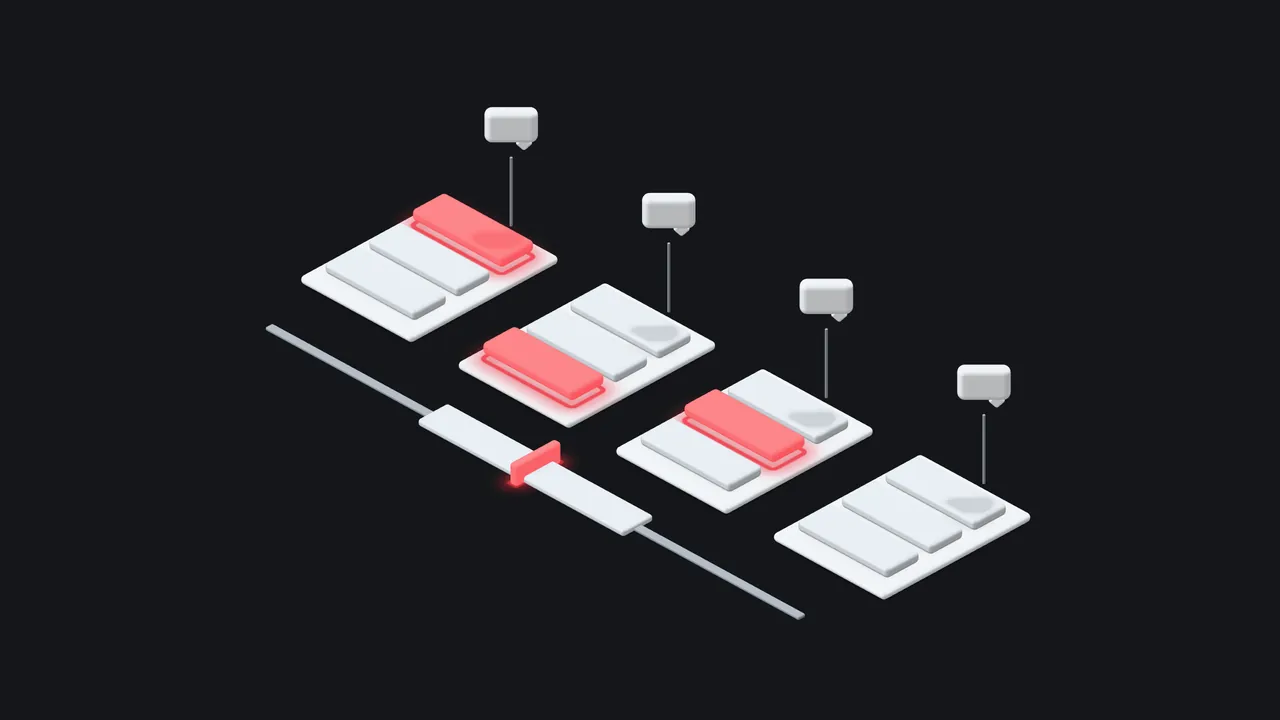
An AI only names you if you clear eight links, in order. If one fails, the following ones do not count.
01 / 08
Access · Can they get in?
- What we look at
- What your server answers to each AI crawler, checked against the robots.txt you really serve, your CDN and your firewall.
- Warning sign
- 403 errors or challenges for AI search crawlers, or rules your CDN adds without your knowing.
- How it is measured
- We count how many of the AI crawlers that matter in your market can get in and, if you give us access to your logs, which errors each one receives.
- What we deliver
- One issue per crawler, with its proof and the exact change in robots.txt, CDN or firewall.
02 / 08
Reading · Can they read you?
- What we look at
- Whether your key content is in the initial HTML or depends on JavaScript, and whether your structured data matches the visible text.
- Warning sign
- Services, hours or addresses that only appear when JavaScript runs, or structured data that is not on the page.
- How it is measured
- We count which templates of your site can be read without JavaScript and check that the structured data says the same as the visible text.
- What we deliver
- Issues per template, with their fix, and your business JSON-LD ready to publish.
03 / 08
Indexes · Are you where they search?
- What we look at
- Whether your key pages are in the indexes each AI draws on: Google, Bing and Brave.
- Warning sign
- Key pages missing from an index, sitemaps with dates that are not real or canonicals pointing to another page.
- How it is measured
- We count how many of your key pages are in each index.
- What we deliver
- The status of each key page per index, with the sitemap and IndexNow notifications configured.
04 / 08
Queries · Do you show up in their searches?
- What we look at
- Your customers’ real questions and the fan-out searches the AI launches from each one.
- Warning sign
- Your website does not show up in the searches with “best”, “reviews”, your area or in another language that the AI runs before answering.
- How it is measured
- For your key questions, we count in how many of those searches you appear and in which index.
- What we deliver
- The fan-out map of each key question, with your gaps.
05 / 08
Passages · Does your text win?
- What we look at
- Whether your pages answer directly, with facts, figures and dates the AI can extract without misreading them.
- Warning sign
- Pages that take three paragraphs to say what you do, undated facts or a single page for many different intents.
- How it is measured
- We run an answer test on each page and match each question to the page that answers it.
- What we deliver
- The literal list of changes per page: the exact text, not an “improve the title”.
06 / 08
Sources · Do others cite you?
- What we look at
- Which websites each AI cites when it talks about what you offer, and which ones name your competitors and not you.
- Warning sign
- The answers in your market lean on media, directories or forums where you are absent.
- How it is measured
- We calculate what share of the citations each website takes and which sources hold or change from one reading to the next.
- What we deliver
- The source matrix and the plan beyond your website, with targets ranked by opportunity.
07 / 08
Entity · Does it know who you are?
- What we look at
- What each AI says about your business when asked, against your real data on your website, your profiles, directories and Wikidata.
- Warning sign
- An old opening time, a different address in two directories or a service you no longer offer.
- How it is measured
- We measure what share of what the AI says about you is correct.
- What we deliver
- The truth sheet (your correct details, in one document) and the coherence matrix, with each correction.
08 / 08
Answer · Does it name you, and rightly?
- What we look at
- In how many answers you appear, whether you are recommended or only cited, with what data and against whom.
- Warning sign
- It only names you if the question already carries your brand, or it uses your website as a source to recommend someone else.
- How it is measured
- We measure your presence with its 95% interval, your share of voice against competitors and whether the AI recommends you or only cites you.
- What we deliver
- The visibility matrix, question by AI, with its margin and against your competitors.
02
We ask like your customers.
We use real questions, without your brand name, in every language of your market. We validate them with you and keep them unchanged, so results can be compared.

03
Each AI, measured separately.
Each AI draws on different sources, so we measure each one separately: ChatGPT, Google’s AI Overviews and AI Mode, and Gemini. We don’t measure Copilot with questions: we use its data in Bing Webmaster Tools. In Perplexity we only check access: we don’t measure its answers yet.

04
One answer is not enough.
The same question does not always get the same answer. That is why we measure with many questions and give each percentage with its 95% confidence interval.
- 3 With 3 answers, the margin is so wide it tells you nothing.
- 10 With 10, it narrows, but it is still not enough.
- 30 With 30, the margin is still about 16 points. That is why we measure with 50 questions or more.
05
Three pieces of our work.
These are three analyses we run in every project: what AI searches for, how often it names you and where it gets each fact about you.
-
05.1
Fan-out map
The searches AI runs on your behalf.
What is the fan-out map?
An AI with search does not look up your question as it stands. It splits it into several searches by subtopic, often with words such as “best”, “reviews” or the year, and sometimes in another language. When the AI shows those searches in its answer, we note them down; when it does not, we reconstruct them and say so. Then, for your key questions, we check by hand whether your pages appear in the top ten results of each search in Google, Bing and Brave. If you do not show up there, the AI never reads you.
Which business do you recommend for [your service] in [your area]?
- best [service] [area] 2026 Other websites
- [service] [area] reviews You appear
- alternatives to [competitor] Other websites
- [service] near me Gap
- mejor [servicio] en [zona] Gap
- [service] [area] opening hours Other websites
-
05.2
Fixed panel
Your presence in each AI, with its margin.
What is the fixed panel?
For each market and language we use a minimum of 50 real questions without your brand, phrased in several ways and always the same. We ask each one once in each AI’s own interface, the one your customers use, under controlled conditions: in the market language, from Spain, with no signed-in session (if an AI requires one, with a clean account), and with the date and model recorded. Every reading comes with its 95% confidence interval (with 50 questions, about 13 points either way). A change between two readings needs more to count as real: with a presence of around 30%, about 18 points. That is why it tracks the big trends, not the nuances from one month to the next.
ChatGPT AI Overviews AI Mode GeminiReading 95% interval -
05.3
Truth sheet
Every AI error, traced to its source.
What is the truth sheet?
We ask each AI about your business in the same interface your customers use: who you are, what you offer, where and since when. We compare every claim with your real data and, for each error or outdated fact, we identify the source behind it. That way it is fixed at the origin, not just on your website.
Truth sheet: each fact about your business, what the AI says, what is correct and the source behind the error Fact What the AI says Source behind it Name Correct Your website Address Does not match Fixed at the source Directory Hours Outdated Fixed at the source Business profile Services Correct Your website Since when Does not know Fixed at the source Media outlet
06
What we measure.
We track eight indicators. Those about the answers are calculated over the whole question panel, in each AI we measure with the panel and in each language, never over a single answer. Your own signals come from your data in Google, Bing and your website.
| Indicator | What it says | How it is expressed |
|---|---|---|
| Presence | In what percentage of answers you appear. | % of answers · CI 95% |
| Coverage | In how many of your questions at least one of the AIs we measure names you. | questions out of the total |
| Share of voice | Your mentions against those of your competitors in the same answers. | % of mentions |
| Recommendation or citation | Whether the AI recommends you or only uses your website as a source. | split per answer |
| Citation share | Which websites hold up the answers in your market. | % of citations per website |
| Accuracy | What share of what the AI says about you is correct. | % of correct statements |
| Fan-out presence | Whether your pages show up in the first searches the AI runs, for your key questions. | per key question and index |
| Own signals | AI impressions in Search Console and Bing, visits from assistants and, if you give us access to your logs, AI crawler hits. | month by month |
We never give an “average position in AI”: two answers almost never rank in the same order.
07
Measure, change, measure again.
- Measure The question panel and drift: what changed and why.
- Prioritise The link that fails first, by impact.
- Change A literal change, approved by you and applied.
- Check Verified on your website and measured in the next reading.
The method, in detail.
-
Why a chain and not a list of improvements?
Because order matters.
Because each link depends on the one before. If a crawler cannot get in, it does not matter how well written the page is; if your website does not show up in the searches the AI runs, it never reads it. That is why we first unblock access, reading and indexes, and only then work on content, sources and entity.
-
What is the source matrix?
Who holds up the answers in your market.
We group all the citations in the answers by website, by AI and by type of question: media, reviews, directories, forums, competitors and your website. We separate stable sources from occasional ones, flag those that name your competitors and not you, and rank them by opportunity. The plan beyond your website comes from there.
-
Which questions do we use?
Your customers’, validated with you.
The ones a customer would ask: discovery (“which business do you recommend for…?”), comparisons, alternatives, doubts before buying and specific conditions. We validate them with you before measuring and freeze them each quarter so that one period can be compared with another.
-
Who approves the changes?
You, always.
No change goes live without your written approval. We apply it ourselves with access to your website, or your web team applies our exact text and we check it.
Questions about the method.
Why do you measure each AI separately?
Because each one consults its own index and its own sources: what works in Google need not work in ChatGPT. We measure each AI apart and do not mix readings obtained under different conditions.
When do changes show?
Technical changes are verified within days. Their effect on the answers takes longer, because each AI re-crawls and updates its sources at its own pace, and model changes move the answers without anyone touching anything. That is why we log every change with its date and measure with the same questions before and after.
Do you show us how you do it inside?
We show you what we measure, with what margin and what we change, with its proof. The protocols and internal criteria are our craft and we do not publish them.
What do you see in your portal?
Every change with its date and status, each month’s note and the evolution of your presence in AI answers, with its margin. No jargon and no inflated figures.
You see it in your portal.
Every change shows up in your portal with its date and its effect.